Categories
Requirements

What’s new in ELM Automotive Compliance 1.0.2

by Michael Halder

In December 2020, version 1.0.2 of IBM Engineering Lifecycle Management Automotive Compliance (ELM AC) will be released. ELM AC helps automotive engineering organisations to setup their IBM Engineering tools according to automotive standards. We are also seeing interest from clients in other industries, since much of the thinking and workflow around compliance is common. The first version of ELM AC was released in December 2019 and focused on supporting Automotive SPICE process groups. The new version extends ELM AC for key aspects around functional safety (ISO 26262).

An engineering dashboard with a dedicated view for safety

Safety Dashboard in IBM ELM AC v1.0.2

In version 1.0.2, ELM AC was extended with a dashboard tab to monitor status and progress of safety work items and work products. The reporting package was enhanced with dedicated safety reports and filters for safety. The complete reporting package includes over 100 reports that give insights into planning, testing status, requirements consistency and completeness, status of problems, change requests, reviews and findings.

With the extended and refined reporting package of ELM AC v1.0.2, engineering teams gain increased transparency for safety-related work. With reports for safety readiness, teams can make educated decisions whether they want to go forward with a release or milestone. Differentiating between safety and QM (non-safety) aspects can be helpful to understand impact of an early release and to thus help to respect safety culture.

The ELM AC process content was extended with process description and an ISO 26262 mapping 

The Method Composer (MEC) process content includes descriptions for roles, process steps and work products. ELM AC v1.0.2 extends the process content in two ways: 1) The solution mapping and process descriptions were extended for ISO 26262. The corresponding chapters are displayed in teal color in the screenshot of the AC process portal landing page below. 2) ELM AC v1.0.2 also contains a new template to refine the process content using the Method Composer web authoring capability in DOORS Next.

Process Landing Page in ELM AC v1.0.2

With these extensions to the Method Composer Process content, IBM ELM Automotive Compliance users understand what and how ELM AC content helps them to comply with ISO 26262. The project template to tailor the process description, allows users to tailor the IBM ELM Automotive Compliance process for 1) their organisation and 2) for each department. Managing this process tailoring is a key aspect to achieve ASPICE Level 3 compliance.

ELM AC now supports safety concept and requirements phase with a HARA template and ASIL checker

ELM Automotive Compliance was extended to support hazard and risk analysis (HARA) within DOORS Next. The requirements management template now includes custom attributes to capture safety elements using vocabulary and structure as defined by ISO 26262 (e. g. Item Definition, Hazardous Events, Safety Goals, Safety Requirements). The safety levels (ASIL) of requirements can be evaluated using an automised value checker which is also provided as part of the Automotive Compliance offering.

HARA module in DOORS Next with ASIL Value Checker

By relying on the pre-defined template for HARA, engineers can save time when performing safety analysis. Managing their analysis in DOORS Next allows teams to benefit from version control and audit trails to handle collaboration. Since DOORS Next allows linking for every artefact, the results of the safety analysis become part of the engineering data set and can be better considered in impact analysis as needed for evaluation of change requests.

ELM AC now supports ASIL Decomposition with dedicated attributes and reports

Safety goals are implemented by functional and technical safety requirements. ISO 26262 allows engineers to decompose safety levels when defining lower level requirements. This means, parts of a systems can be implemented with lower rigour. When decomposing safety levels, the decomposed requirements have to be implemented independently (coexistence criteria). In ELM AC v1.0.2, the decomposition of safety requirements is supported with dedicated ASIL attributes following the ISO 26262 standard notation. Moreover, ELM Automotive Compliance provides reports to detect violations against decomposition coexistence criteria.

With these extensions, engineers are supported to perform ASIL decomposition in a standardised and a safe way. The included reports help to detect and resolve dependencies between safety-critical and non-safety-critical components.

IBM ELM AC is now available as token license

With 1.0.2, ELM AC can be purchased as token license. In previous versions, ELM AC was only available as Floating and Authorised license. Customers who plan to use ELM AC with ELM 7.0.2 or later can use IBM ELM Automotive Compliance as token license. The license is specific to ELM Automotive Compliance and does not entail access to any other IBM Engineering product. By offering ELM Automotive Compliance as token license, customers benefit from automised compliance to the ELM AC licensing terms. Also, customers are able to later report on their license usage. Floating and Authorised licenses continue to be valid licensing options. We recommend reaching out to your local sales representative for more detailed information.

AC now supports performing and tracking of ISO 26262 confirmation reviews

To comply with ISO 26262, companies have to perform confirmation reviews for key safety work products. ISO 26262 prescribes for which work products confirmation review have to be performed and how independent the reviewer has to be. In version v1.0.2, IBM ELM Automotive Compliance was extended with templates to plan and perform confirmation reviews. ELM AC v.1.0.2 contains a work item template which automises the creation of all required confirmation review. ELM AC also provides reports to track status of confirmation reviews as well as corresponding checklists and findings.

With the confirmation review approach introduced in ELM Automotive Compliance, engineering teams gain a systematic, tool-guided process to capture and perform confirmation reviews. Thus, engineering teams are enabled to track and monitor the status of confirmation reviews, understand the required level of independence, who performs them and what findings need to be addressed

IBM offers tailor-made service offering to adopt ELM Automotive Compliance

Overview IBM Expert Labs Service Offerings for IBM ELM AC

You can get ELM AC installed and setup in less than a week of effort. IBM also offers services that includes ASPICE assessments and a detailed analysis of your current tool landscape. As a result of this project, you know exactly where you stand and how can reach your compliance goals most efficient. Please reach out to your local IBM Expert Labs (formerly IBM Lab Services) representative or Judith Leick ([email protected]) to learn more about these service offerings.

External parties provide additional content for IBM Engineering like expert checklists and tool qualification  

IBM ELM Automotive Compliance helps customers to tailor IBM Engineering tools for automotive standards. There is additional content available to help customers with compliance for ISO 26262 from two different parties.

Kugler Maag Cie is a consultancy focused on regulated systems and software engineering development. For the confirmation review process introduced in ELM AC v1.0.2, the company offers expert checklists that can be used to validate work products as required by ISO 26262. The checklists can be imported and used in IBM ELM AC. ELM AC provides reports to track status and exceptions in these checklists. We recommend to visit the Kugler Maag Cie website (external link) and to reach out to them directly to learn more.

Validas is a company specialised on tool validation and qualification. The company offers solutions to automise the process of classifying, validating and qualifying software tools. Validas now offers tool qualification kits for IBM Engineering products. The company offers two different sets of products:

  • Validas 26262 QKit for IBM DOORS
  • Validas 26262 QKit for IBM ELM

We recommend to visit the Validas websites (external link) and reach out to them directly for more information.
Categories
Requirements

What’s New in IBM Engineering Workflow Management V7.0.2

by Kate Draper

IBM Engineering Workflow Management (EWM) V7.0.2 brings additional capabilities in various areas: tracking and planning, SCM, reporting, and Git integration. Below are some of the key enhancements for this release.

UX Modernization:

Simplified Linking

Simplified linking lowers the overhead for practitioners. In V7.0.2, drag and drop along with copy and paste linking is available for all OSLC link types. Linking is a key aspect of dependency management in ELM. It’s easy to drag a work item from a work item editor, plan editor or even the quick planner view and drop it in the work item editor or link to other types of artifacts in ELM. Once dropping the artifact on the drop target, a Create links dialog appears so you can properly specify your link type.

Additionally, we have introduced simplified linking when using global configurations. It’s now possible to associate more than one global configuration with an EWM release, and practitioners will see a fuller set of links between work items and versioned requirement, test, or work items. There is some administrative setup; see the New & Noteworthy and Knowledge Center for details.

Now available as a beta: you can now report on files managed by the Jazz SCM, including traceability between files and requirements or other artifacts in the engineering lifecycle.

People picker

A new people picker reduces users’ overheads in finding and selecting people to set as owners or subscribers. It adds new functionality to scope users based on access control, remembers your 10 most recently selected users and helps manage preset users. The People Picker is one of our first common React-based components being adopted in other ELM applications for UI/UX consistency.

Git Integration:

Enhancements in 7.0.2 support our strategy of making it easier for developers using Git to contribute to larger programs using ELM.

Chrome Plug-In

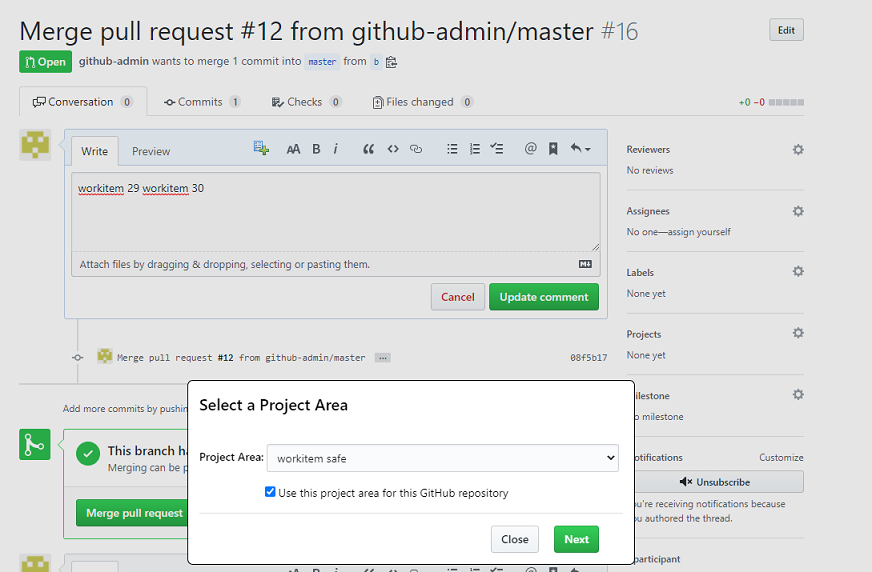
The new Chrome browser plug-in makes it easier to link between EWM work items and GitHub commit or pull requests using a graphical picker. This extension works with GitHub Enterprise servers.

Work Item Picker

Link GitHub pull requests and GitLab merge requests to EWM items.

Imran Hashmi IBM ELM engineering lifecycle management

Diagnostics Page

V7.0.2 brings a new diagnostics page that provides guidance to help administrators resolve issues. This page is available in the CCM admin section.

Imran Hashmi IBM ELM engineering lifecycle management

Performance and Data Scale Improvements:

Optimized incremental loads

Developers doing rebuilds with minimal or no changes need fast turn-around. Improved incremental loads are now possible using load rules.

Reduce the growth of your EWM database

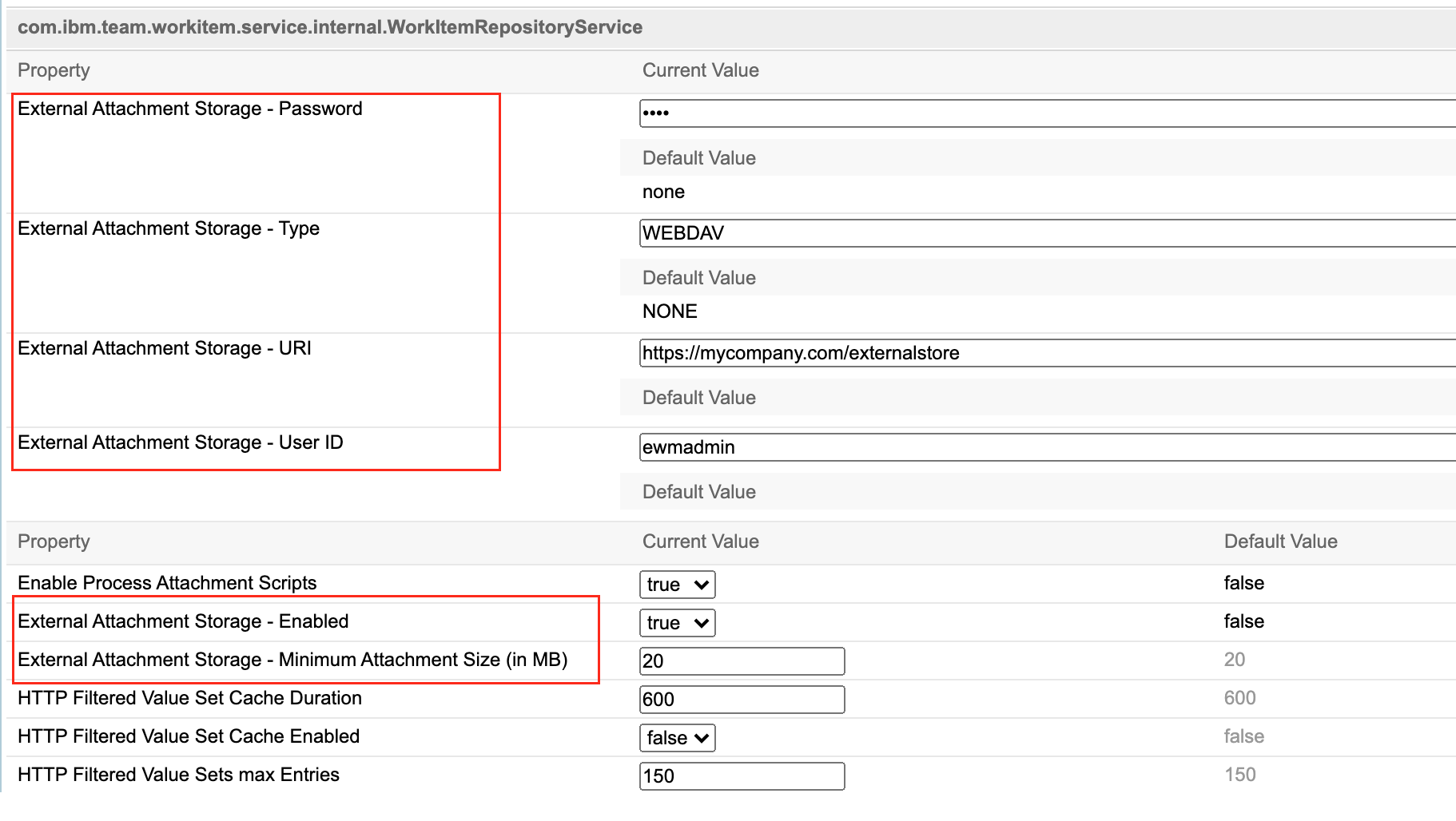
Many teams have large attachments to work items. Storing them in an external repository will reduce the growth rate of EWM repository size. Store large work item attachments in a filesystem or via WebDAV like Artifactory. These are the same external repositories you can use for large files managed by the SCM.

Imran Hashmi IBM ELM engineering lifecycle management

These are just some of the highlights of the Engineering Workflow Management V7.0.2 release. For a complete list of enhancements for this release, please see https://jazz.net/pub/new-noteworthy/ewm/7.0.2/7.0.2/index.html.

Kate Draper

Offering Management

Categories
Requirements Design Testing Workflow

Demo: ALM for Medical Devices IEC 62304 ISO 13485 ISO 14971

IBM ApplicationLifecycle Management or ELM Engineering Lifecycle Management for Medical Devices IEC 62304 ISO 13485 ISO 14971

Categories
Design Requirements Testing Workflow

Understand ELM Automotive Compliance in under 5 minutes

Categories
Design Requirements Testing Workflow

MBSE- IBM Client Success: Fagor Industrial accelerates time to market by 30 percent

Fagor Industrial

Washing away the competition by cutting time-to-market by up to 30 percent

Inspired by the evolution of smartphones, Fagor Industrial decided to launch a first-of-its-kind touchscreen washer extractor. With a short window of opportunity before competitors introduced similar products, the company achieved a rapid time-to-market by working with ULMA Embedded to develop the embedded systems using IBM® Rational® solutions.

Business challenge

Fagor Industrial spotted a chance to excite customers with a never-before-seen touchscreen washer extractor. To gain first-mover advantage, it needed to design and launch this innovative product fast.

Transformation

To achieve a swift time-to-market, Fagor Industrial engaged IBM Business Partner® ULMA Embedded to develop its cutting-edge product using sophisticated IBM Rational development platforms.

Results

Up to 30%

reduction in time-to-market, enabling Fagor to gain first-mover advantage

25%

faster development of new embedded systems for a state-of-the-art product

Unlocks

huge time and cost savings by reducing the need to build physical prototypes

Business challenge story

Seizing a commercial opportunity

Imran Hashmi IBM ELM engineering lifecycle management

The success of touchscreen interfaces on smartphones has led to increasing numbers of other devices adopting touchscreen technology—including laptops, cash registers, ATMs and even cars. Observing consumers’ keen appetite for touchscreens, and the greater usability they afford, Fagor Industrial set out to capitalize on this trend by launching an industrial washer extractor that can be controlled via a touchscreen interface.

At the time, no similar offerings were available on the market, but the clock was ticking. Fagor Industrial knew that first-mover advantage would be critical in this new product segment. To seize the narrow window of opportunity, the company needed to design, test and launch its new touchscreen offering as quickly as possible.

“With Rational, we can design and launch new products faster than ever, sharpening our competitive edge.”

— Imanol Lukas Etxarri, Electronic Engineer, Research and Development, Fagor Industrial

Transformation story

Calling in the experts

Developing a first-of-its-kind product using the latest technologies is always a challenge. For assistance in the venture, Fagor Industrial engaged an expert team from ULMA Embedded, an IBM Business Partner. The ULMA team proposed adopting IBM Rational Rhapsody Designer for Systems Engineers to help accelerate the pace and improve the quality of development.

Imanol Lukas Etxarri, an Electronic Engineer in the Research and Development Department at Fagor Industrial, explains: “We have worked with ULMA Embedded Solutions many times in the past, and they are one of our key strategic partners. When we decided to develop a new touchscreen washer extractor, we knew that it would be difficult, so we engaged ULMA Embedded Solutions to help us on the journey.

“We have a very strong relationship with ULMA because their engineers have an in-depth knowledge of the latest market trends, best practices and cutting-edge development tools. When they advocated Rational Rhapsody for this particular development, we were quickly convinced that it was the right recommendation.”

Results story

Achieving a clean sweep

Previously, Fagor Industrial built new embedded systems by first manufacturing the hardware, then developing the software using the C programming language, running on microcontrollers. Although most of the company’s previous products had fewer functions and a simpler interface than the new touchscreen washer extractor, the programming was complex and time-consuming.

In addition, the traditional development process required significant investment in building a physical prototype before the company could obtain feedback on the product from marketing and other departments, and then finalize the design.

With Rational, all that has changed, as Imanol Lukas Etxarri explains: “Rational offers a broad array of advantages in developing a new product. For example, it allowed ULMA Embedded Solutions to begin by designing all of the hardware on the computer, and simulate the results.

“This meant we could show detailed simulations of the new product to our customers, marketing personnel and executives to obtain their feedback. We worked with them to get the look, feel, functionality and usability of the new product right before we built physical prototypes—resulting in major time and cost savings.”

Additionally, the flexibility of the Rational solution made it easy for ULMA Embedded Solutions to develop new functions requested by Fagor Industrial—such as personalized washing cycles—and incorporate them into the new washer extractor’s control panel and processes.

As the development team made changes to the definitions of the washing cycles, the Rational software automatically updated any dependent processes—for example, telling the drum when to spin, empty or fill with water. Thanks to this automation, ULMA Embedded Solutions was able to develop the hardware for the new washer extractor 25 percent faster than expected.

Imanol Lukas Etxarri continues: “Thanks to ULMA Embedded Solutions and Rational software, we were able to cut time-to-market by up to 30 percent. Because we launched our touchscreen washer extractor before our competitors brought their products onto the market, we gained first-mover advantage. Our offering has been a hit with customers because it offers a user-friendly touchscreen and helpful features for personalized wash cycles.”

He adds: “With any innovative product, you can expect to encounter some service and support issues immediately after the launch. However, with our touchscreen washer extractor, we experienced far fewer issues than expected. Because we identified and solved many potential problems in the simulation stage, we have been able to achieve a higher standard in the end product.”

In the future, Fagor Industrial plans to enhance its touchscreen washer extractor with internet connectivity, tapping into the trend towards smarter laundries. As a result, customers will be able to control the devices remotely.

Building on its success, Fagor Industrial also plans to streamline the design of future products using Rational, enabling it to respond rapidly to emerging customer demands and hot trends in the market.

About Fagor Industrial

Headquartered in the Spanish town of Oñati, Fagor Industrial S. Coop. manufactures products for cooking, cleaning and chilling food on an industrial scale. The company is the leading producer of machinery for the hotel and catering sector in Spain, and is among the top ten manufacturers in this market segment in the world. Employing 1,800 people across eight production plants and 18 sales offices, Fagor Industrial serves customers in 90 countries.

Solution components

  • Watson IoT Platform

Take the next step

To learn more about IBM Rational Rhapsody Designer for Systems Engineers, please contact your IBM representative or IBM Business Partner, or visit the following website: ibm.com/software/products/en/ratirhapdesiforsystengi

Founded in 2009, ULMA Embedded Solutions specializes in providing engineering services to support the entire lifecycle of electronic products—from concept to manufacturing and maintenance, including design, development and test phases. The company is based in Oñati, Spain. To learn more about ULMA Embedded Solutions, please visit: www.ulmaembedded.com/en

View more client stories or learn more about IBM Watson IoT